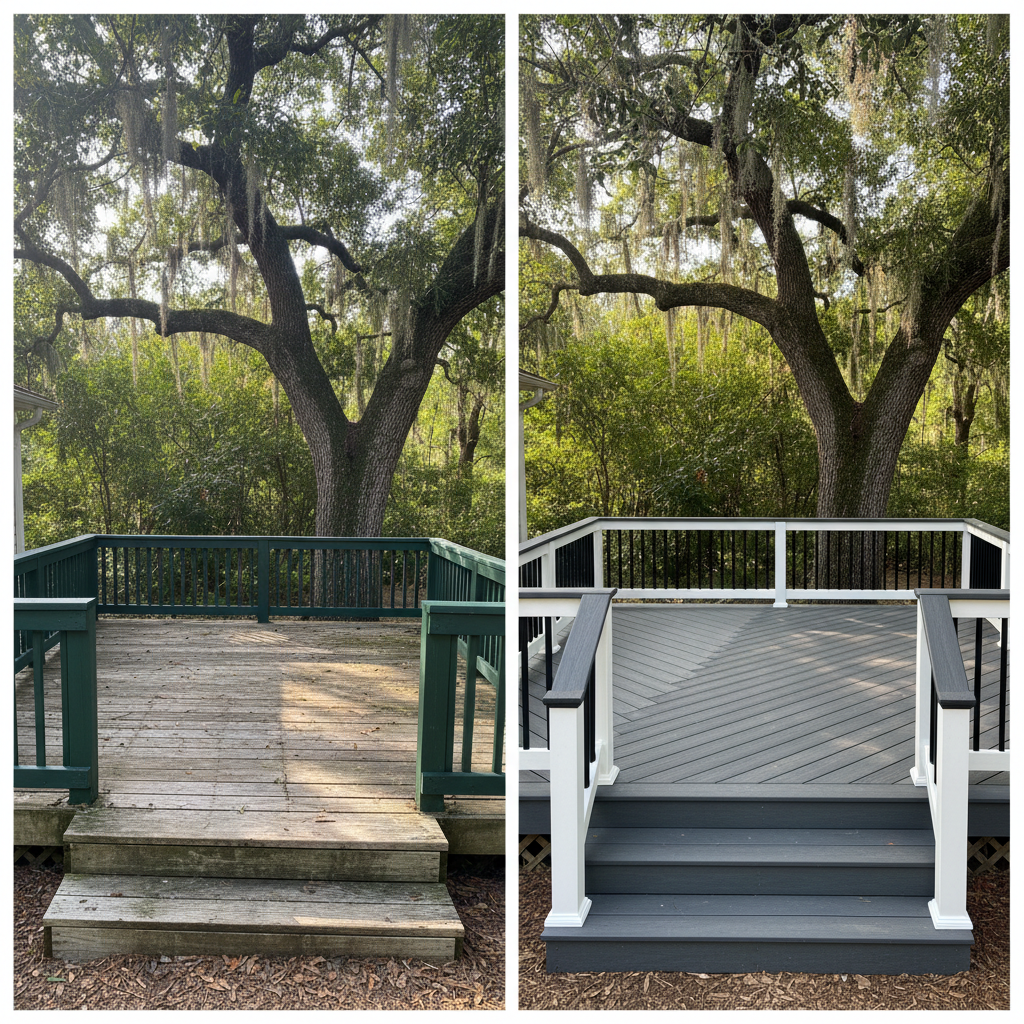
You're looking at composite decking, huh? Smart move. Here in Savannah, with our humidity and those relentless summer sun rays, anything that cuts down on maintenance is usually a win. But not all composite decks are created equal. When you start digging into it, you'll quickly run into two main types: capped and uncapped. Let's break down what that means for your backyard.
What's the Big Difference?
Alright, so an uncapped composite board is basically a solid mix of wood fibers and plastic resins, all the way through. Think of it like a big, dense cookie. It's still a huge step up from wood in terms of rot and insect resistance, but it's not completely impervious to everything. Capped composite, on the other hand, takes that same core and adds a protective layer – a cap – usually made of a more durable plastic polymer. This cap is like a hard shell around the cookie, giving it extra protection.
Uncapped Composite: The Original Workhorse
When composite decking first came out, it was all uncapped. It was revolutionary compared to wood, no doubt. You didn't have to worry about splinters, and staining or painting was a thing of the past. But it wasn't perfect, especially in a place like Savannah.
- Cost: Generally, uncapped composite is going to be your more budget-friendly option upfront. It's less complex to manufacture, so the material cost is lower.
- Durability: It's tough, don't get me wrong. It won't rot or get eaten by termites like wood. But because the wood fibers are exposed on the surface, it can still absorb some moisture. That means it's more prone to mildew and staining, especially in our damp climate. You might see some fading over time too, and it can be a bit more susceptible to scratches if you're dragging furniture around.
- Maintenance: While you're not staining or sealing, you'll still be doing a fair bit of cleaning. Mildew is a real problem here, and uncapped boards can be a magnet for it. You'll need to power wash it regularly, probably once a year, and use a good deck cleaner to keep it looking decent.
- Appearance: The colors tend to be more muted, and the grain patterns aren't as realistic as some of the newer capped options. They can also show water spots more readily.
Capped Composite: The Modern Solution
This is where composite decking really shines today. Manufacturers saw the limitations of uncapped boards and engineered a solution. That protective cap makes a world of difference.
- Cost: You're going to pay more for capped composite. There's no getting around that. The manufacturing process is more involved, and the materials for the cap are higher-performance.
- Durability: This is where capped composite absolutely wins, especially for us. That cap is usually made of a high-performance polymer that's incredibly resistant to moisture, fading, stains, and scratches. We're talking about a deck that can stand up to a spilled glass of red wine, a greasy barbecue, or even the constant dampness we get after a typical summer afternoon thunderstorm in Ardsley Park. It won't swell or contract as much, and it's far less likely to grow mildew.
- Maintenance: This is the big selling point for most homeowners. Cleaning is a breeze. A simple hose-down and a soft brush with some mild soap is usually all you need. Forget the annual power washing and scrubbing for mildew. It's practically set it and forget it.
- Appearance: Modern capped composites look fantastic. The cap allows for much more realistic wood grain patterns, richer colors, and even multi-tonal boards that mimic exotic hardwoods. They also resist fading much better, so your deck will look new for years longer.
My Recommendation for Savannah Homeowners
Look, I've built a lot of decks around here, and I've seen how our weather treats different materials. If you're going with composite decking, my strong recommendation is to go with capped composite. Yes, it's a bigger investment upfront. I get it. But the long-term savings in maintenance, the superior durability against our brutal humidity and sun, and the fact that it'll look great for decades without you having to lift a finger (beyond a quick wash) makes it worth every penny.
Think about it: you're installing a deck to enjoy your outdoor space, not to spend your weekends scrubbing mildew. The peace of mind and the sheer longevity of a capped composite deck in our climate are unmatched. You'll spend less time working on your deck and more time enjoying it with family and friends.
If you're considering a new deck and want to talk through the options for your specific home, give us a call at Heritage Deck Solutions. We're always happy to share our experience and help you make the best choice for your budget and lifestyle.