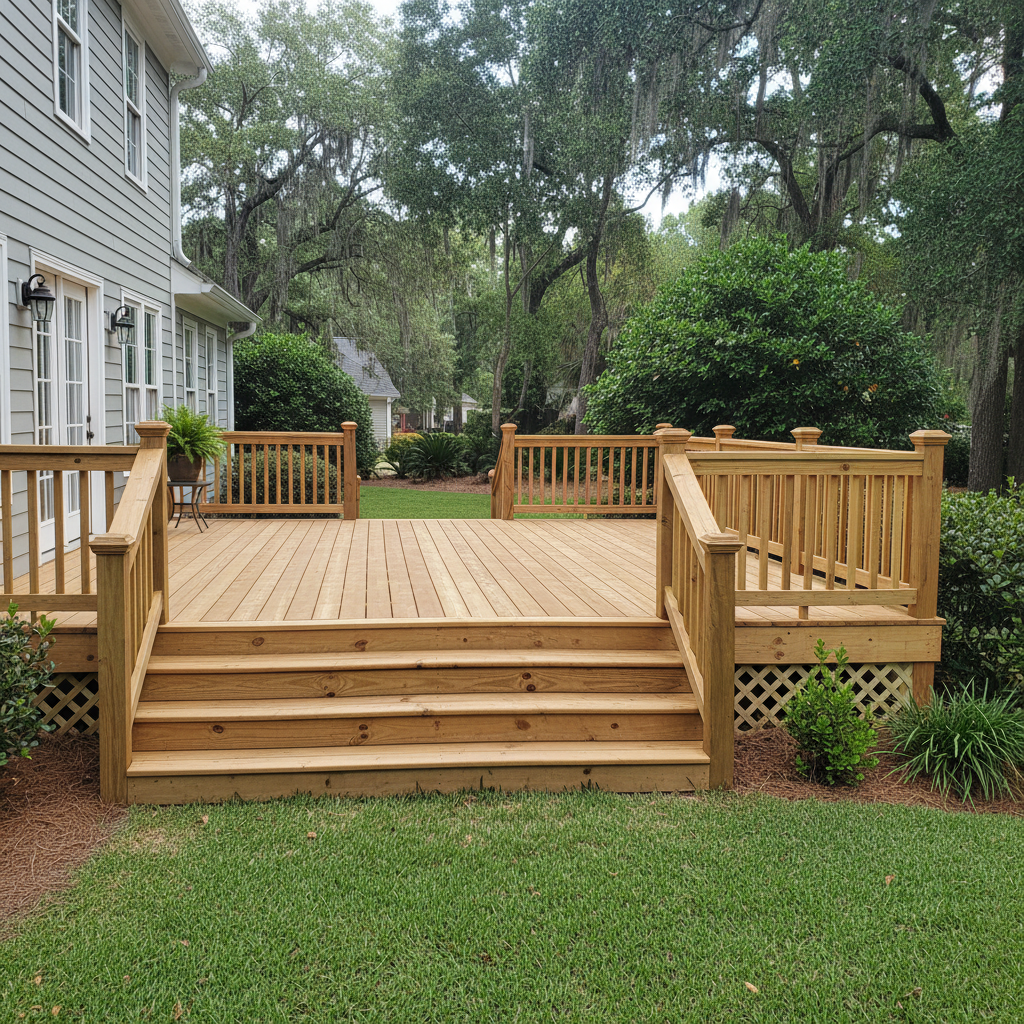
So, you're thinking about a new wooden deck for your Savannah place? That's a really good idea. A deck that's built right can add a ton of enjoyment and real value to your home, especially with our long, beautiful outdoor seasons here in Georgia. But honestly, the first thing most people wonder is, "How much is this actually going to cost me?"
It's not a super simple answer, but I can give you the real story on what makes a wooden deck cost what it does in our area. We'll look at what you can generally expect to pay, and how to make sure you're getting a good, fair deal. I've seen a lot of decks go up and gotten many quotes over the years, and there are some clear patterns to how things shake out.
What Really Drives the Price of a Wooden Deck?
A few big things really make a difference to your deck's final price tag. It's not just about how big it is, even though that's a pretty significant factor.
- Size and How Complicated It Is: This is probably the most obvious point. A bigger deck means you need more materials and more time for the crew to build it. But it's not just about square footage; the design itself plays a huge role. A simple rectangular deck is almost always going to be more affordable than one with multiple levels, curves, or tricky angles. Those fancier designs mean more cuts, more framing work, and a lot more hours for the crew. For example, adding a multi-level layout can increase the cost by 20-30% compared to a single-level deck.
- What Materials You Choose: This is an area where you have quite a bit of say. For wooden decks, you're usually looking at pressure-treated pine, cedar, redwood, or even really dense tropical hardwoods like Ipe. Pressure-treated pine is the most budget-friendly option, typically running around $15-$25 per square foot once it's installed. Cedar and redwood are a step up, and they naturally resist insects and rot, which is a nice bonus. Tropical hardwoods are the most expensive, but they're incredibly dense and sturdy, often lasting 25 years or more with just a little maintenance.
- How High Off the Ground It Is & Any Stairs: If your deck sits high off the ground, say more than 30 inches, it's going to need more solid structural support, longer posts, and often more complex stair systems. More stairs, especially wide or wrap-around styles, add to both the material and labor costs.
- Railing Systems: Railings aren't just there for safety; they really contribute to the overall look. Standard pressure-treated wood railings are the cheapest, usually costing about $20-$30 per linear foot installed. If you go for something more decorative or low-maintenance, like aluminum or composite railing, the cost will definitely go up.
- Site Conditions: Building on a perfectly flat, easy-to-get-to lot is always cheaper than building on a sloped yard or in a tight spot. Things like needing extensive grading, removing trees, or dealing with poor soil conditions (which we sometimes see around here with our coastal clay, honestly) can add to the labor and foundation costs.
- Permits and Inspections: You absolutely need permits for a new deck, especially if it's attached to your house or more than 30 inches off the ground. Here in Savannah, permit fees for smaller home projects like decks can run anywhere from $50 to $300. You'll also have plan review fees, which might be around $75 for projects under $75,000. A good contractor handles all this paperwork for you, but it's still part of the overall cost.
Typical Cost Ranges for Wooden Decks in Savannah
Alright, let's get into some actual numbers. Based on what I've observed and what's generally available, here's a realistic breakdown for wooden decks right here in Savannah:
- Basic Pressure-Treated Pine Deck: For a pretty straightforward, ground-level or low-height pressure-treated pine deck, you're generally looking at $20 to $35 per square foot. Some sources might suggest as low as $14.50 per square foot for pressure-treated pine, but that often doesn't include all the labor and any little complexities that come up. This range would be for a simple design, standard wood railing, and minimal site preparation. A 200 sq ft deck might run you anywhere from $4,000 to $7,000.
- Mid-Range Wood Deck (Cedar/Redwood): If you decide to upgrade to cedar or redwood, or if you include a slightly more complex design, you're probably going to be in the $35 to $50 per square foot range. These materials offer better looks and natural durability, which is a big plus. A 200 sq ft deck in this category could easily be $7,000 to $10,000.
- Higher-End Wood Deck (Tropical Hardwood/Custom Design): For tropical hardwoods like Ipe, or a custom-designed deck with multiple levels, built-in features, and premium wood railings, expect to pay $50 to $70+ per square foot. These decks are built to last a long time and really look amazing. A 200 sq ft deck could easily be $10,000 to $14,000 or even more.
Overall, for a standard project, a new deck in Savannah can range from $10,000 to $30,000, depending on all these different factors. That's a pretty wide range, but it shows how much choices matter.
What's Included in a Deck Quote?
When Heritage Deck Solutions gives you a quote, or any good builder for that matter, it should be pretty full and clear. Here's what you should expect to see:
- Design and Planning: This covers the first meeting, drawing up plans, and any changes that need to be made.
- Permits and Inspections: We handle getting all the necessary permits from the City of Savannah or Chatham County and setting up inspections.
- Materials: A detailed list of all the lumber (for framing, the deck surface, railings), fasteners, concrete for footings, and any other hardware.
- Labor: The cost for the crew to build the deck, including getting the site ready, framing, putting down the decking, installing railings, and building stairs. Labor typically makes up about 30-50% of the total project cost.
- Foundation Work: Digging and pouring concrete footings to make sure the structure is stable and meets code.
- Cleanup and Debris Removal: Hauling away all the construction waste once the job is done.
- Warranty: A solid builder will stand behind their work with a structural warranty, which is important.
How to Avoid Overpaying for Your Deck
Nobody wants to feel like they got taken advantage of. Here are my best tips for getting a quality deck without spending too much money:
- Keep the Design Simple: Seriously, this is one of the biggest ways to save money. A simple rectangle or L-shape means less wasted material and less labor. Curves, bump-outs, and multiple levels look cool, but they add up fast.
- Be Smart About Materials: Pressure-treated pine is a really good choice, especially if you're willing to commit to regular maintenance. You don't always need the most expensive wood for every single part of the deck. Consider using a higher-grade material for the actual decking surface and a more economical one for the framing, for instance.
- Get Multiple Detailed Quotes: Don't just go with the first person you talk to. Get at least three quotes, and make sure they're all itemized. This lets you compare things fairly and really understand what you're paying for.
- Phase Your Project: If your budget is a bit tight, consider building a smaller, functional deck now and expanding it later. You can always add features like pergolas, built-in seating, or more complex railing systems down the road.
- Protect Your Investment: This isn't about saving money right away, but it's about saving long-term. Make sure your builder uses good quality fasteners and flashing. And once it's built, make sure you clean and seal it regularly. Savannah's humidity and sun can be tough on wood, so maintenance is key to making it last.
- Build in the Off-Season: Sometimes, scheduling your build during the slower months (late fall to early spring) can lead to better pricing or faster project starts, as contractors might have more flexible schedules.
Building a new deck is a big investment, but it's one that really pays off in enjoyment and home value. Do your homework, ask lots of questions, and work with a builder you trust. You'll end up with a beautiful outdoor space you can enjoy for years to come, which is the main goal.